🗺️
Skill 1Planning
Ends the 'I forgot the project was due' cycle. Teaches how to break big tasks into visible steps.
19 lessons·~124 minSchool · Home
The same skill gap that tanks homework also blows up mornings and friendships. Kai teaches learning and life skills in short interactive lessons — so school, home, and friendships all get easier. They finish with a personal Skills Profile they can print and share.
See these tools in 3 mins
What changes
Same brain, three arenas. The skills travel.
The honest comparison parents ask us for.
Kai
Private tutors
Planner apps
YouTube advice
What families are saying
“First tool my 14-year-old has actually finished. He printed his profile and showed his contact teacher himself. That's never happened before.”
“Kai doesn't lecture. It just helps me figure out the next tiny thing. School stuff feels less huge now.”
“The profile changed the conversation at school. Teachers finally understood what he needs — and started actually giving it.”
Created by a teacher with ADHD who spent 10 years in Norwegian classrooms watching these exact gaps.
Why this exists
Executive function skills — planning, focus, emotional regulation — develop 3–5 years later in ADHD brains. Your teen isn't behind. They're on a different timeline.
Without targeted tools, the same homework battle repeats every night. Guilt piles up. Confidence erodes.
Kai teaches the skills school skips, in the way ADHD brains actually absorb them — short, interactive, stigma-free.
The curriculum
205 short lessons · about 24 hours total · skills that travel from the classroom to the kitchen table to the group chat.
Ends the 'I forgot the project was due' cycle. Teaches how to break big tasks into visible steps.
Fixes the exploding backpack and the missing worksheet. Systems your teen can actually keep.
Why 15 minutes of homework becomes 3 hours — and the 1.5x rule that fixes it.
The hardest part of homework is starting it. This module rebuilds that skill from scratch.
Stops the 'I walked upstairs and forgot why' spiral. Tools that offload the mental juggling.
Teaches self-monitoring without self-criticism — the skill that quietly powers every other one.
For the door-slam moments and the impulsive texts. Small pauses, real regulation.
Instead of 'try harder,' your teen learns to spot their own distractors and set up the room to win.
Why plan changes feel like a five-alarm fire — and a reset ritual that shrinks the meltdown.
Coming back after quitting IS the skill. Ends the all-or-nothing shame spiral.
Learning isn't rereading. It's using strategies that help your brain notice, understand, remember, and use info.
Why your body reacts the way it does — and the exact tools that turn overload into regulation, at school and home.
The bridge module: turns everything you've learned about your focus, memory, sensory system, emotions, and social life into 'I can say what I need.' Ends with a printable Self-Advocacy Plan.
Social skills are skills — not personality. Reading cues, joining conversations, handling conflict, setting boundaries, and building your own social toolkit.
Name emotions before they explode, use calming strategies that work, and recover faster.
How it works
Your teen answers a short, judgment-free check-in. No grades. No 'wrong' answers.
Their AI coach picks a skill that matches what's hardest right now — not what's next on a syllabus.
Each skill they build adds to their personal Executive Functioning Skills Profile — a document they can print and hand to school so they get the support they deserve.
The takeaway
Every lesson adds two things: a one-pager teachers can read in 60 seconds, and colorful posters your teen can print for their wall — their strengths, their go-to moves, the skills they're working on this week, in their own words. Same brain, three arenas.
Personal Executive Functioning Skills Profile
Sam's skills profile
How I start tasks best
Short lists · timers · music on
What derails my focus
Vague instructions · silent rooms · phone on desk
Tools that work for me
Body doubling · fidgets · chunked checklists
In one sentence
"I work best when the next step is written down and I have a fidget in my hand."
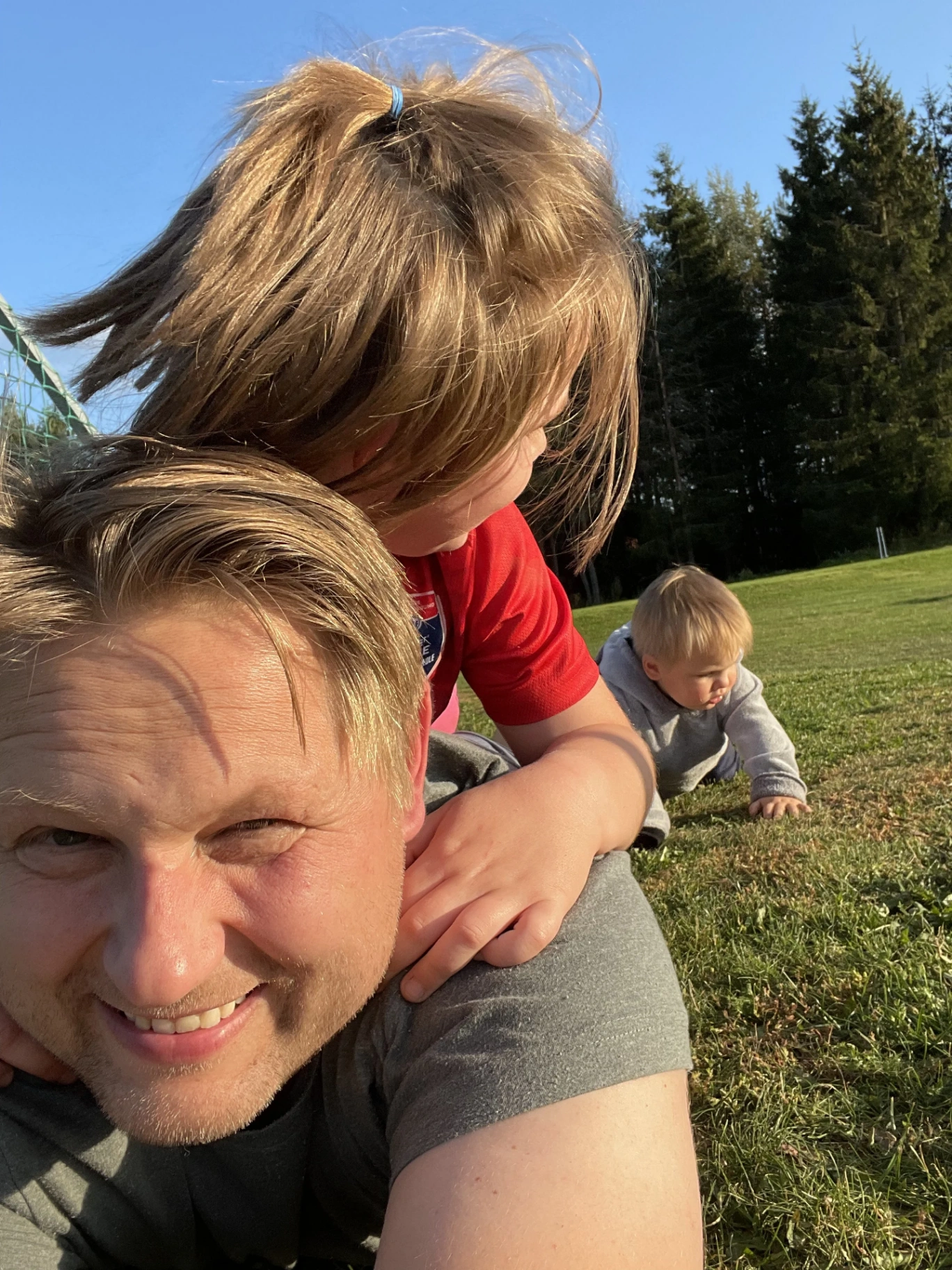
Built by a teacher, not a startup
In my classroom, I kept noticing the same pattern: capable students falling behind, not because they lacked intelligence, but because they were never taught the skills needed to manage school and daily life. These challenges went beyond traditional executive functioning. Many students struggled with how to effectively learn and remember information, how their sensory system affected their focus and emotional regulation, how to clearly express what they needed, and how to navigate social situations with confidence.
School teaches the subject. It rarely teaches the skills the subject quietly requires.
That's why I built Kai. I created it as a practical, ADHD-friendly tool that teaches real, usable skills — including Planning, Organization, Task Initiation, Working Memory, Attention, Learning Skills, Sensory Processing, Self-Advocacy & Independence, and Social Skills & Relationships. My goal was to help students not only develop these skills but also walk away with clear, professional profiles they can use to advocate for the support they actually need.
Raising two neurodivergent kids myself made the need for this kind of support even more obvious. I wanted to build something that helps students understand how their brains work and gives them the language and tools to manage it effectively.
— Marius Andersen
Teacher with ADHD · Mindfulness & Meditation Instructor · Dad · Creator of Kai
Try a real mini-lesson
It's 8pm. There's a big assignment due tomorrow. What's the first move?
One short email a day. Practical, teacher-tested moves you can try tonight. No spam, unsubscribe anytime.
Built for how ADHD brains work
ADHD brains lose focus fast. Every lesson is short enough to finish before interest crashes. Progress saves automatically.
Your teen can ask Kai anything — including the questions they feel too awkward to ask a human. Roleplay hard moments. Get a chunked plan. No judgment.
Every skill adds to their Brain Playbook — a printable profile they can hand to teachers, counselors, or family.
Dyslexia font, text-to-speech, reduce-motion, high-contrast, quiet fidget button. Because ADHD often travels with other differences.
Just to be clear
The research
Every skill is built on the executive-function research of Dr. Russell Barkley and Dawson & Guare's Smart but Scattered framework, alongside the social-emotional work of Porges & Siegel (nervous system), Dodson (RSD), and Kapp & Milton (masking) — translated into a language teens will actually read.
What parents tell us
"For the first time, homework started without a fight. He actually opened the app on his own."
Composite quote from early-access parents. Real testimonials coming soon.
Pricing
No subscription. No trial that auto-charges. Try Lesson 1 free, then unlock the full tool when you're ready.
One-time · lifetime access · locks in for the life of your account · + local VAT if applicable
Introductory pricing while Kai is launching.
Price returns to $499 when the launch window closes.
or try Lesson 1 free first →FAQ
It's a self-paced digital course that teaches teens the "invisible" skills school never covers — focus, organization, emotional regulation, and more. Think of it as a coach in their pocket, built specifically for how ADHD brains actually work. No lectures. No shame. Just practical skills, broken into bite-sized lessons.
Teens and tweens who are neurodivergent (ADHD, and often those with autism or executive-function challenges too) — and honestly, any young person who struggles with focus, motivation, or feeling overwhelmed. It's also for you, the parent, who's tired of the daily battles and wants tools that actually help.
It was built by someone who lives in both worlds: a teacher, environmental therapist (miljøterapeut), certified mindfulness and yoga instructor, a neurodivergent adult, and a parent. This isn't theory from a textbook — it's built from real experience on the front line with neurodivergent kids.
Lesson 1 is free forever. No card. In ten minutes tonight, your teen can start building the skills that make school, home, and friendships all a little easier — and their own Skills Profile they can print and share.
Start Lesson 1 free